
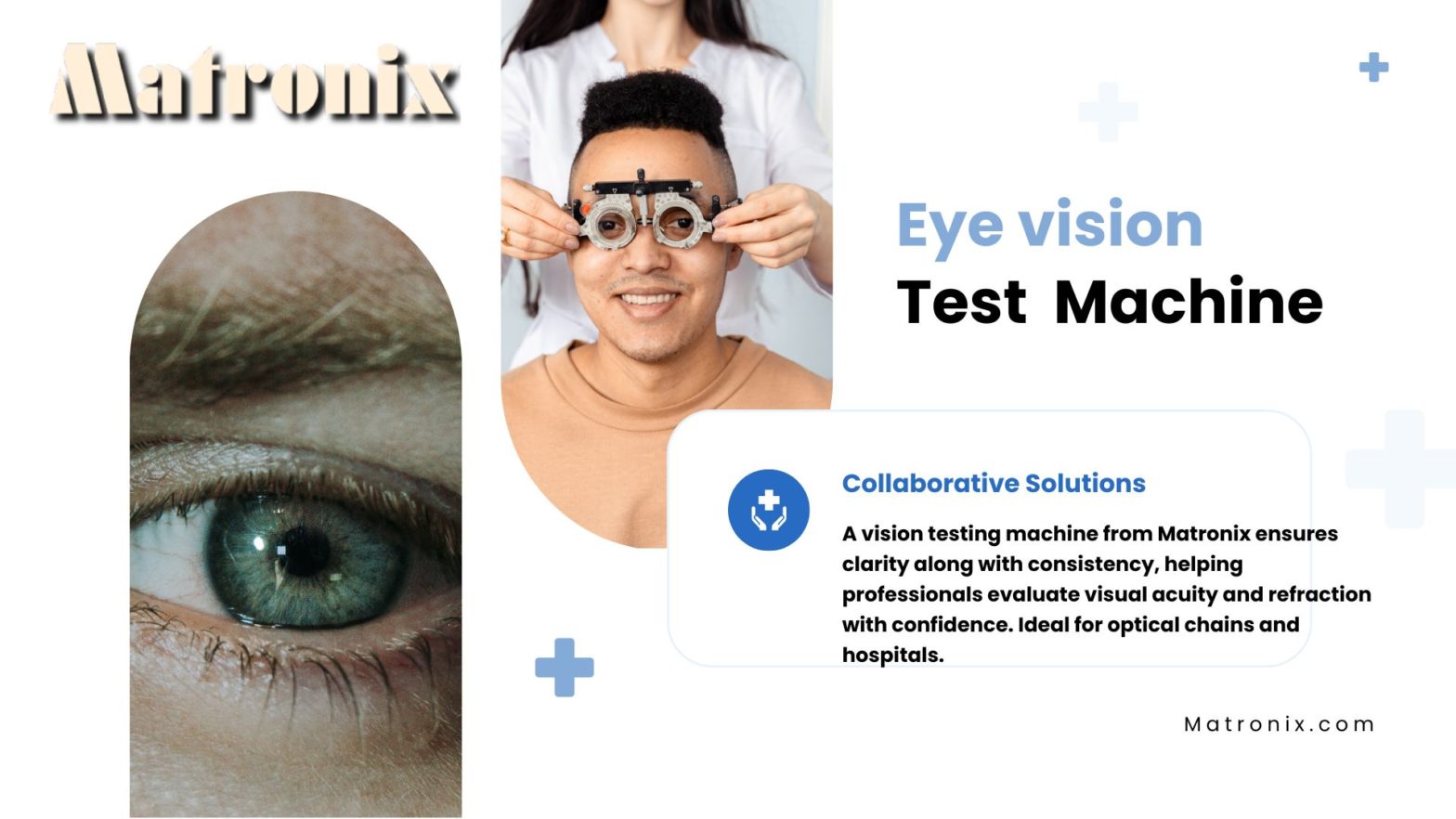
The field of eye care has undergone a remarkable transformation in recent years, largely due to the rise of advanced diagnostic technologies. As eye diseases become increasingly common across all age groups, clinics are now investing in high-precision tools that elevate the accuracy, consistency, and reliability of clinical evaluations. Modern diagnostic systems no longer rely solely on subjective responses or manual interpretations—they now combine automation, digital imaging, and artificial intelligence to detect even the smallest irregularities. Among these new-age innovations, the adoption of a high-quality instrument for examining the eye has become an essential component of accurate clinical evaluation.
With precision tools playing a major role in early detection, treatment planning, and long-term monitoring, eye care professionals can now offer better outcomes, improved patient trust, and a stronger foundation for preventive care.
Why Precision Matters in Modern Eye Examinations
Accurate vision assessments are crucial for maintaining long-term visual health. Even minor deviations in measurements can lead to missed warning signs, incorrect prescriptions, or delayed diagnosis of serious conditions. Precision diagnostic tools address these concerns by offering:
-
Highly accurate and consistent readings
-
Early detection of microscopic abnormalities
-
Objective, data-driven analysis
-
Better monitoring of disease progression
-
Improved patient experience and comfort
The shift toward precision strengthens every step of the examination process and enables clinicians to make more confident decisions.
Digital Imaging Creates Clearer Clinical Insights
One of the most significant advancements in modern diagnostics is high-resolution digital imaging. Devices such as Optical Coherence Tomography (OCT), fundus cameras, and ultra-widefield imaging systems reveal structural details that were previously impossible to examine thoroughly.
Advantages of digital imaging include:
-
Layer-by-layer retinal visualization
-
Detection of early macular changes
-
Identification of nerve fiber damage
-
Insights into blood vessel health
-
Accurate documentation for historical comparison
Digital imaging reduces uncertainty and provides a deeper, clearer view of internal eye structures—crucial for diagnosing glaucoma, diabetic retinopathy, macular degeneration, and other sight-threatening diseases.
Automated Measurements Improve Accuracy and Speed
Traditional eye examinations relied heavily on manual techniques and practitioner judgment. Today’s automated devices deliver objective measurements with minimal human interference.
Popular automated tools include:
-
Auto-refractors for refractive error measurement
-
Non-contact tonometers for intraocular pressure
-
Digital keratometers for corneal curvature
-
Auto lens meters for verifying prescription strengths
These tools minimize operator error, produce fast and repeatable results, and enhance the accuracy of routine examinations. Clinics benefit from improved workflow, while patients enjoy quicker and more comfortable evaluations.
Corneal Topography Reveals Surface Irregularities with Precision
Corneal topography is a vital component of advanced eye evaluations. This technology maps the corneal surface, revealing color-coded images that highlight curvature variations.
Corneal topography supports:
-
Early detection of keratoconus
-
Pre-operative screening for refractive surgery
-
Accurate contact lens fitting
-
Detection of subtle surface distortions
-
Post-operative monitoring
Even minor corneal irregularities can significantly affect vision, and precision mapping ensures that no detail goes unnoticed.
AI-Driven Systems Strengthen Diagnostic Accuracy
Artificial intelligence is redefining the future of eye care. AI algorithms analyze diagnostic images in seconds, detecting abnormalities that may be too subtle for manual examination.
AI’s contributions to accuracy include:
-
Automated detection of retinal diseases
-
Early identification of high-risk patients
-
Consistent image interpretation
-
Reduction of human subjectivity
-
Predictive insights for future risks
By supporting clinical decisions, AI ensures that evaluations are thorough, precise, and reliable.
Precision Tools Improve Patient Trust and Engagement
Patients today want clear explanations and transparent results. High-precision diagnostic tools generate visual reports and digital summaries that make complex findings easier to understand.
Benefits for patients include:
-
Better understanding of their eye condition
-
More confidence in diagnostic findings
-
Improved compliance with treatment plans
-
Motivation to return for regular checkups
When patients can see their eye health visually represented, they feel more informed and valued.
Improved Workflow and Efficiency for Clinics
Precision tools not only enhance accuracy—they also streamline clinical operations.
Precision technology supports:
-
Shorter examination times
-
Fewer manual steps
-
More reliable documentation
-
Easy comparison of past and current results
-
Higher patient throughput without compromising quality
This efficiency helps clinics manage higher volumes while maintaining superior care standards.
The Future of Precision in Eye Evaluations
As innovation continues to accelerate, future eye examinations will be even more accurate and automated. Anticipated advancements include:
-
AI-powered predictive diagnostics
-
Fully automated screening stations
-
Higher-resolution imaging technologies
-
Cloud-based remote examination systems
-
Wearable technologies for real-time monitoring
These tools will transform early detection and make quality eye care more accessible globally.
Conclusion
High-precision tools have become the cornerstone of modern eye care, revolutionizing how clinicians evaluate, diagnose, and monitor visual conditions. From automated measurements to AI-driven imaging, these advancements deliver consistency, accuracy, and clarity that traditional methods could never achieve. By integrating precision technology into routine practice, clinicians can catch diseases earlier, plan treatments more effectively, and offer patients a deeper understanding of their eye health. As innovation continues to evolve, precision tools will remain essential for delivering reliable, high-quality clinical evaluations across all levels of care.